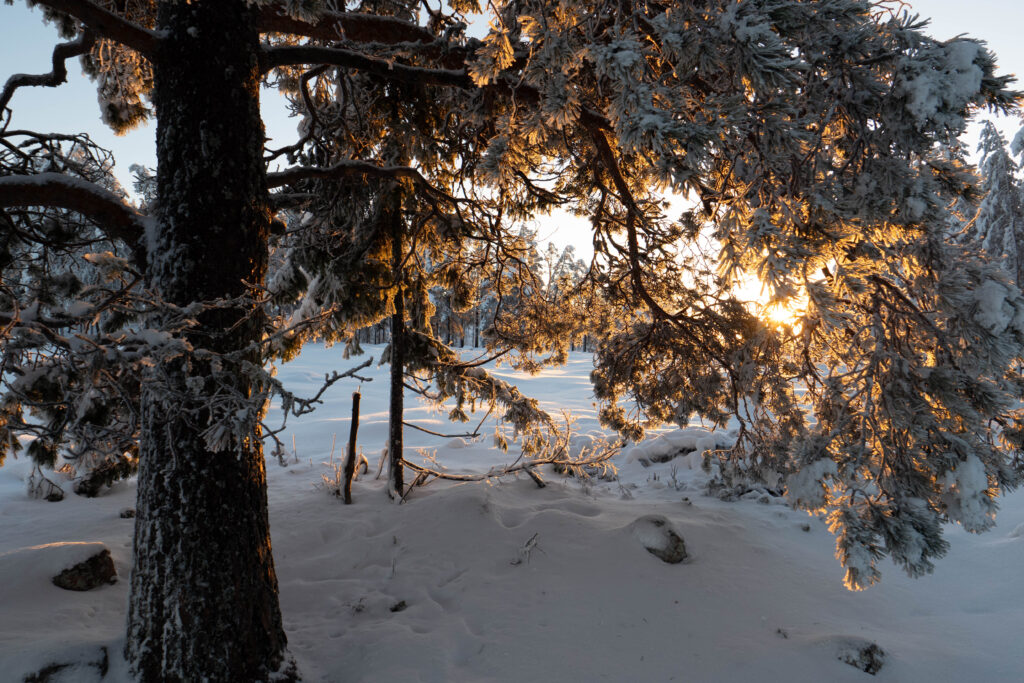
THE WORLD’S QUIeTEST PLACE
In northern Sweden, a place is being formed that claims the right to completely escape civilization.
This is an ongoing project to actively shape, protect, and maintain a place defined by the absence of human-made disturbance. This is done by working deliberately with the remaining sources of disturbance through dialogue, coordination, and voluntary adjustment.
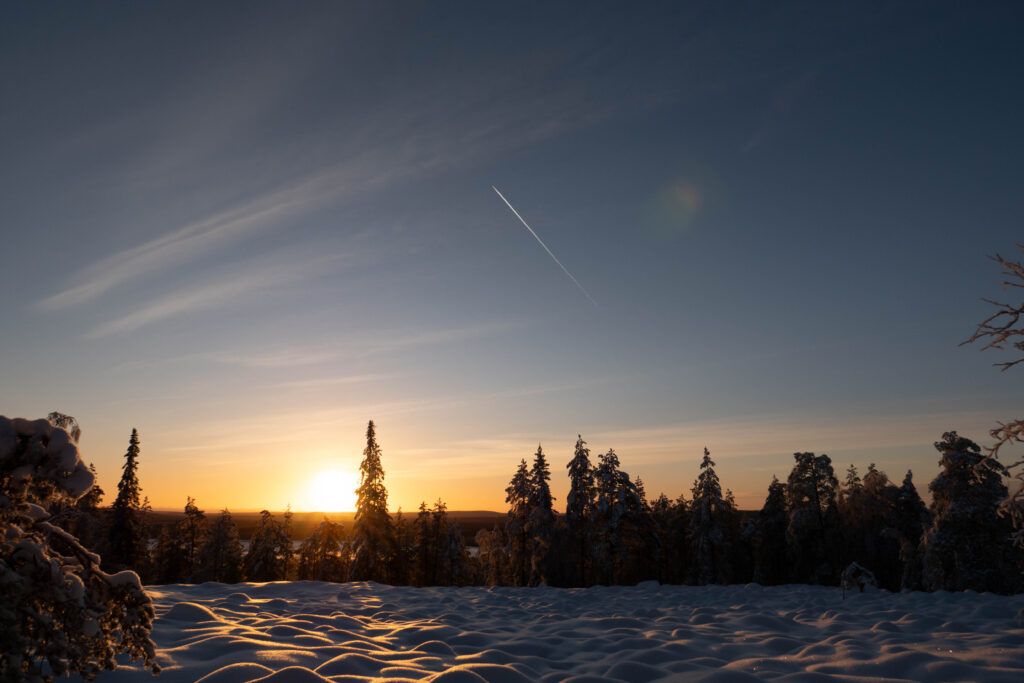
TECHNOLOGY EVERYWHERE
Today, true absence no longer exists.
There is nowhere on Earth
where one can completely escape civilization.
Even in the deepest parts of the Amazon.
Even far out in the Sahara.
Technology eventually makes itself known.
Through distant engines.
Through aircraft passing overhead.
Through the certainty
that something artificial will appear.
There is no longer any place
where one can fully step outside it.
This must change.
Because access to complete absence should
not depend on luck, distance, or privilege.
Because the possibility of silence,
of distance,
of absence
is not a luxury.
It is essential.
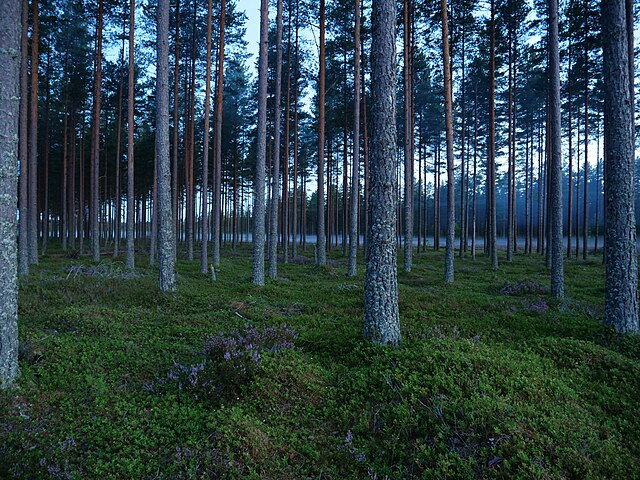
THE NECESSITY OF ABSENCE
To escape civilization is not only to leave noise behind.
It is to leave structures.
To leave distant engines.
To leave the knowledge
that something artificial
may appear at any moment.
It is the absence of sound —
but also the absence of interruption,
movement,
and human presence.
It is being somewhere
without having to relate to what comes next.
Without anticipation.
Without background activity.
For a while,
nothing arrives.
And yet, this kind of absence
has not disappeared by accident.
It has faded quietly,
even from the places meant to protect it
A SYMBOLIC ACT
Creating a place with an exceptional degree of freedom from noise
is not an end in itself.
It is a way of asserting that the possibility of complete absence
is not a luxury —
but a right that deserves protection.
It is symbolic —
because it is a beginning.
A concrete reminder
of what has been lost —
and of what can still be preserved.
An act that brings this need into focus.
That gives form to something
that is otherwise difficult to defend,
measure,
or prioritize.
By insisting that there must be places
where human-made sound does not reach at all,
we open a broader conversation
about how society values silence,
rest,
and mental restoration.
Not everywhere.
But deliberately.
Thoughtfully.
With intention.
The value lies in taking absence seriously.
In recognizing silence and undisturbed presence
as conditions that require care. This is how priorities begin to shift.
Not through retreat,
but through recognition.

WHY THE WORLD NEEDS THIS
For more than a century, landscapes have been protected through national parks and conservation areas,
established to preserve nature and allow people to experience environments shaped primarily by natural processes rather than human use.
But the world around them has changed.
Air traffic, distant infrastructure, and constant movement
now reach even the most remote places.
What has quietly disappeared
is not nature itself,
but the experience of complete absence.
Historically, humans have always had access to places
beyond constant stimulation.
This is about the conditions that make absence possible.
Conditions that allow presence
without anticipation.
Without interruption.
Without the need to respond.
In many otherwise undisturbed landscapes,
air traffic has become the final factor
determining whether long-lasting absence is possible.
This is not a critique of technology.
It is a recognition of limits.
When absence becomes uncertain,
it can no longer be relied upon.
And without the trust
that we can enter nature without interruption,
full presence becomes impossible.
What this project does
- Establishes and protects conditions for long-lasting absence from human-made disturbance
- Works through dialogue, coordination, and voluntary cooperation — not bans or exclusion
- Focuses on one specific location where such conditions may still be possible
- Addresses remaining large-scale sources of disturbance, including air traffic, where small adjustments can make a decisive difference
(Read more in the FAQ →)
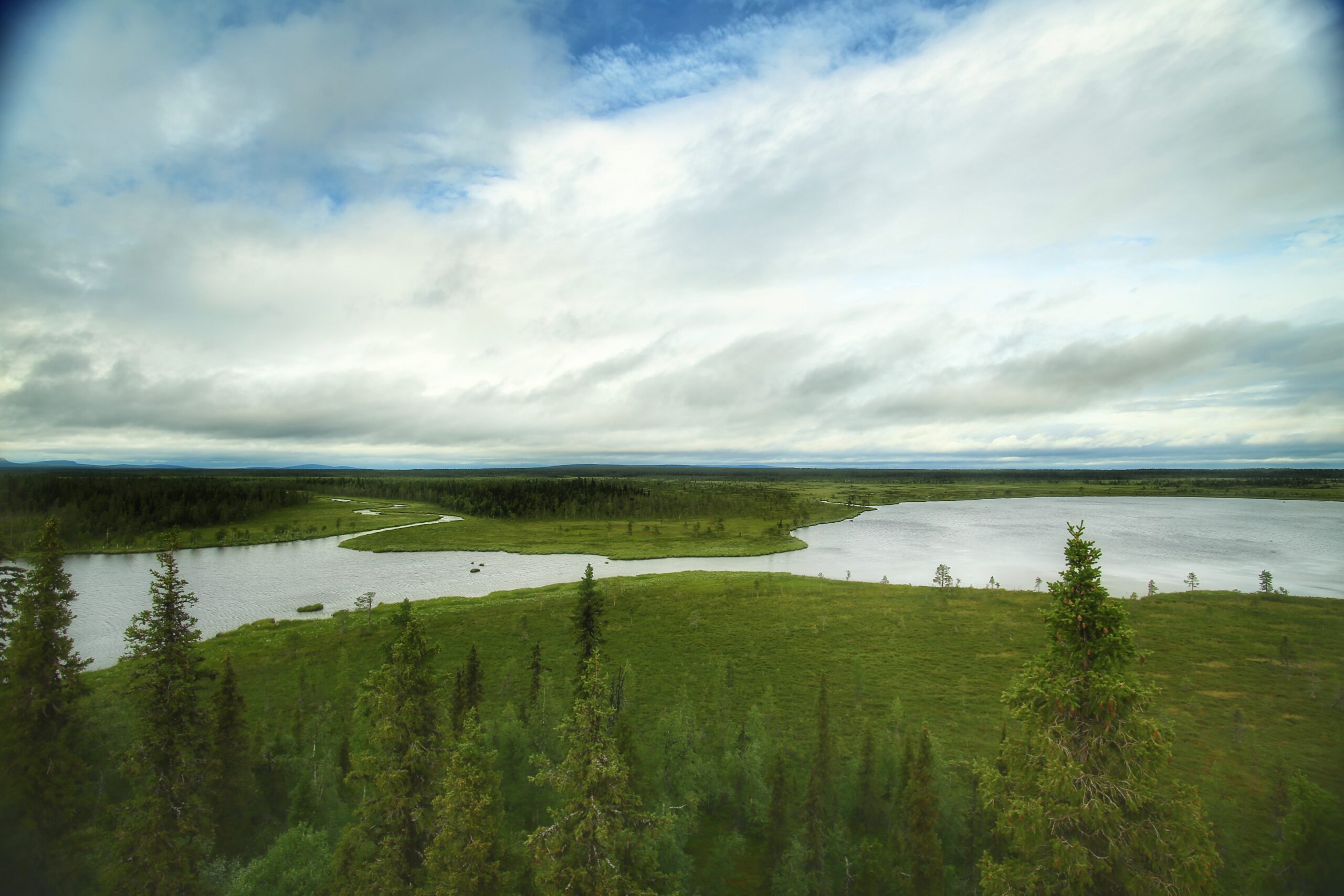
WHERE TO BEGIN
The place we have in mind has not been chosen
for dramatic views or striking scenery.
It is not a destination meant to impress.
It will not be the most dramatic landscape you have seen,
and that is not why you would come here.
This is a landscape that allows you to slow down.
A place where the quiet created on the ground
can meet the quiet that gradually settles in the mind.
A landscape whose repetition, openness, and restraint
do not demand attention —
but make it possible to let go of it.
We need a landscape
that gives the mind a chance to settle.
After studying many such environments,
one place has emerged as a natural beginning:
Muddus National Park,
in the far north of Sweden.
Large forests.
Open bogs.
Water.
Repetition.
Distance.
Landscapes that do not demand attention —
but allow attention to return.
In the coming period, the area will be visited and studied more closely
to better understand how a complete absence from civilization
can be preserved over time.
Muddus is not the end point of this work.
It is where it begins.